

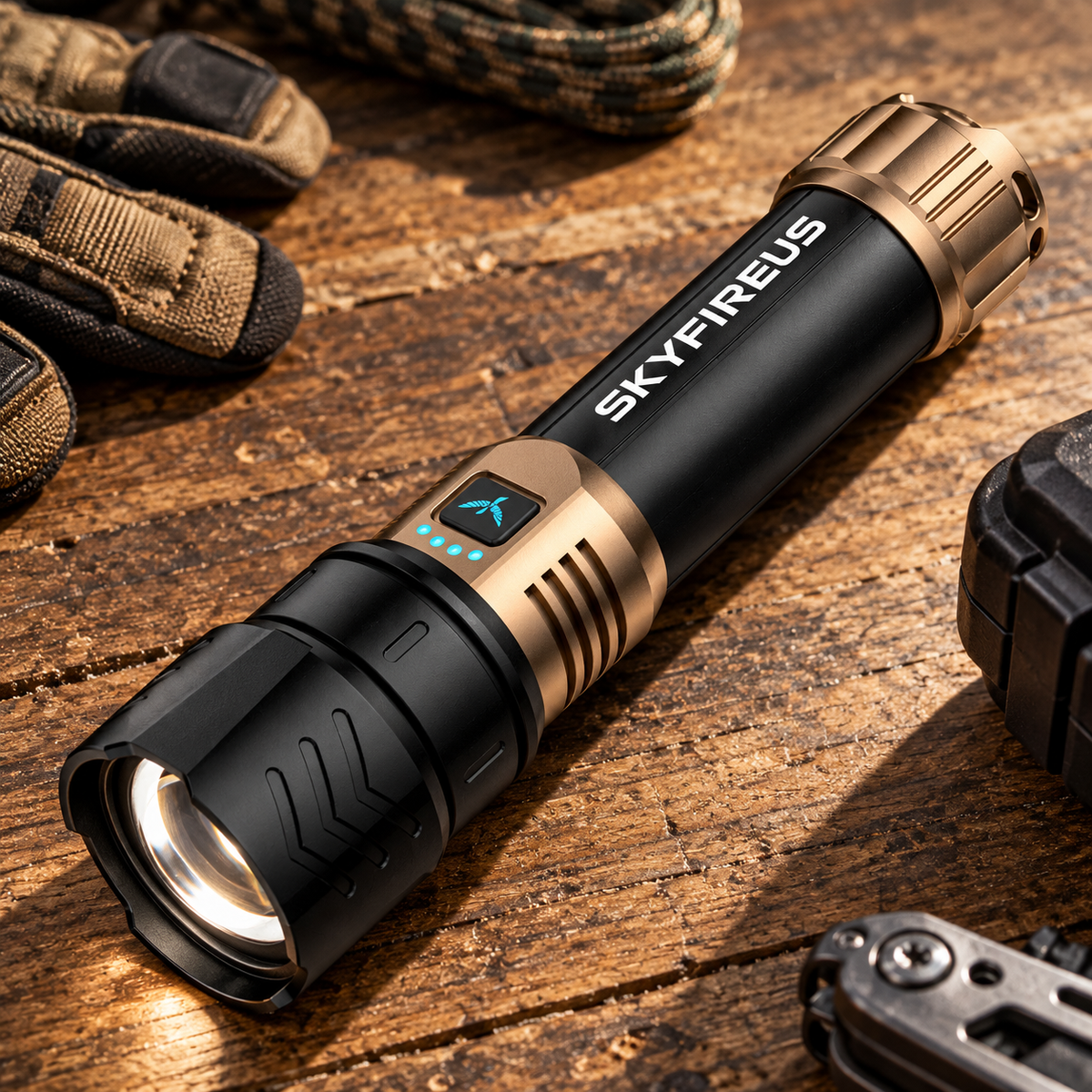
A flashlight spends a surprising amount of time bumping into other things: the tools in a garage drawer, the keys in a daypack, the edge of a picnic table. The body has to live with that treatment long after the packaging is gone.
An aluminum flashlight is worth considering for regular use around the house and outdoors. But the material name answers only part of the buying question. Grip, overall weight, the lens, and the way the light fits your hand all deserve a closer look.
Start with the whole flashlight
Aluminum alloy is a common choice for flashlight housings. It can form a sturdy body without the weight of an equivalent steel part. That doesn't mean every aluminum flashlight is light enough for a jacket pocket. The battery and head can add considerable bulk.
Before buying, check the dimensions and the weight with the battery installed. A substantial light may suit a garage shelf or a camping bin. Carrying that same light on a forty-minute evening walk is a different decision.
Think about where yours will spend most of its time. If the answer is “beside the back door,” ease of grabbing it matters more than whether it disappears into a jeans pocket.
Pay attention to the grip and controls
A close-up product photo can tell you more than a dramatic outdoor shot. Look at the section your fingers will wrap around. Is there texture? Is the switch within reach? Does the body narrow or widen where you expect to hold it?
Those details become noticeable when you're carrying grocery bags from the car or trying to hold a leash at the same time. If you regularly wear gloves, check the switch size and how the beam adjustment works, too.
A wrist strap can help with carrying, but it doesn't fix an uncomfortable grip. At home, try the light with your usual gloves before deciding where it belongs in your kit.
A metal body can still get warm
LED flashlights generate heat, especially at higher output. Aluminum conducts heat, so warmth can reach the exterior of the light. A metal housing is not a promise that a flashlight will stay cool in your hand.
Follow the model's operating instructions, use lower output for close work, and switch it off if it becomes uncomfortable to hold. Let it cool before packing it away. Covering the head with fabric to soften the beam is a poor substitute for a proper area light.
Finish, water resistance, and drop resistance are separate questions
An anodized finish is a surface treatment, not a guarantee against every scratch. Even a well-made light can show wear after sharing a toolbox with metal sockets.
Water protection depends on the complete design, including seals and port covers. Drop resistance also involves more than the body: a lens or internal connection can be damaged even when the housing looks fine. Check the model's stated protection and care instructions instead of assuming that a metal flashlight can handle immersion or any fall.
Plastic housings deserve the same fair reading. A purpose-built polymer light may suit a particular job well. Material alone is too narrow a basis for choosing between two finished products.
An aluminum option in the SkyFire range
The SkyFire 1097 rechargeable flashlight has an aluminum-alloy body and an adjustable flood-to-spot beam. That gives you a concrete starting point: look at the housing and controls, then consider whether adjustable lighting fits the jobs you have in mind.
For a broader comparison, browse the SkyFire flashlight collection with your storage spot and carrying habits in mind. A light you can comfortably use while unloading the car or finding something behind a workbench has earned its place in the drawer.

Leave a comment
This site is protected by hCaptcha and the hCaptcha Privacy Policy and Terms of Service apply.