

The porch light reaches the steps, but the gate at the back of the yard is still dark. Later, on the dog's last walk, you need to see the sidewalk just ahead of your shoes. Those are two different lighting jobs, even if you use the same flashlight for both.
When comparing flood vs. spot flashlights, start with where you need the light. A flood beam spreads light across a wider nearby area. A spot beam concentrates it into a narrower area for looking farther ahead. An adjustable flashlight lets you change the beam as the task changes.
Use a wide beam while you're moving
On a neighborhood walk, you need to see more than one bright patch of pavement. The curb, a raised slab, and the edge of a driveway can all matter at once.
A wider beam is a useful starting point. Aim it ahead and down, then adjust the brightness until you can comfortably read the ground. When someone approaches, lower or redirect the light so you're not shining into their face. Keep it away from your dog's eyes, too.
Carrying comfort matters on these routine walks. Try reaching the switch and adjusting the beam while you hold the leash in your other hand. If you're regularly juggling bags or handling a dog that pulls, a headlamp may suit the walk better than a handheld light.
Narrow the beam for a specific check
Across a yard, a tighter beam helps you direct light toward a gate latch, the shed door, or an object beside the driveway. Stop walking while you make that check, then return the beam to the ground before moving on.
This is also useful beside a parked RV. A wider beam helps when you're finding something near the steps; a narrower one can help you look toward a specific point farther across the site. Keep the light on your own task rather than sweeping it through other people's windows.
Some fixed-beam flashlights have a bright center with softer spill around it. They can handle both nearby and farther viewing without a zoom adjustment. If you prefer to shape the beam yourself, look for an adjustable flood-to-spot design.
Brightness and beam shape answer different questions
Lumens describe total light output, not how that light is distributed. Two flashlights with similar output can look quite different when one spreads the light widely and the other concentrates it.
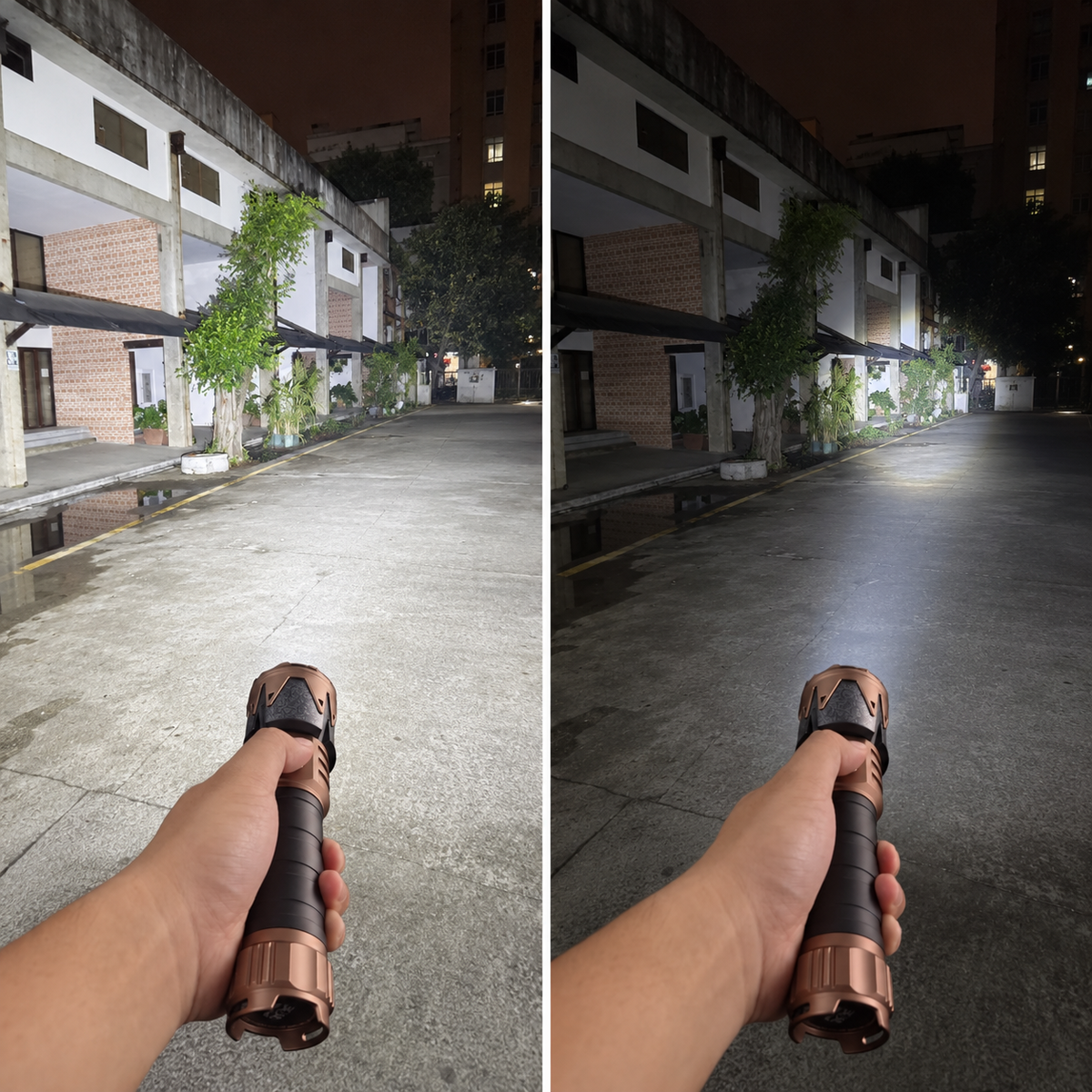
Beam photos can help, especially when the distance, exposure, and surroundings are comparable. A dramatic image of a distant tree doesn't tell you how comfortable the beam will be on a sidewalk. Look for nearby examples as well.
For a simple check at home, try the light on the path you actually use. Can you see the surface clearly without raising the output to its maximum? Can you briefly check the end of the driveway and then return to comfortable walking light?
Where the SkyFire 2000J fits
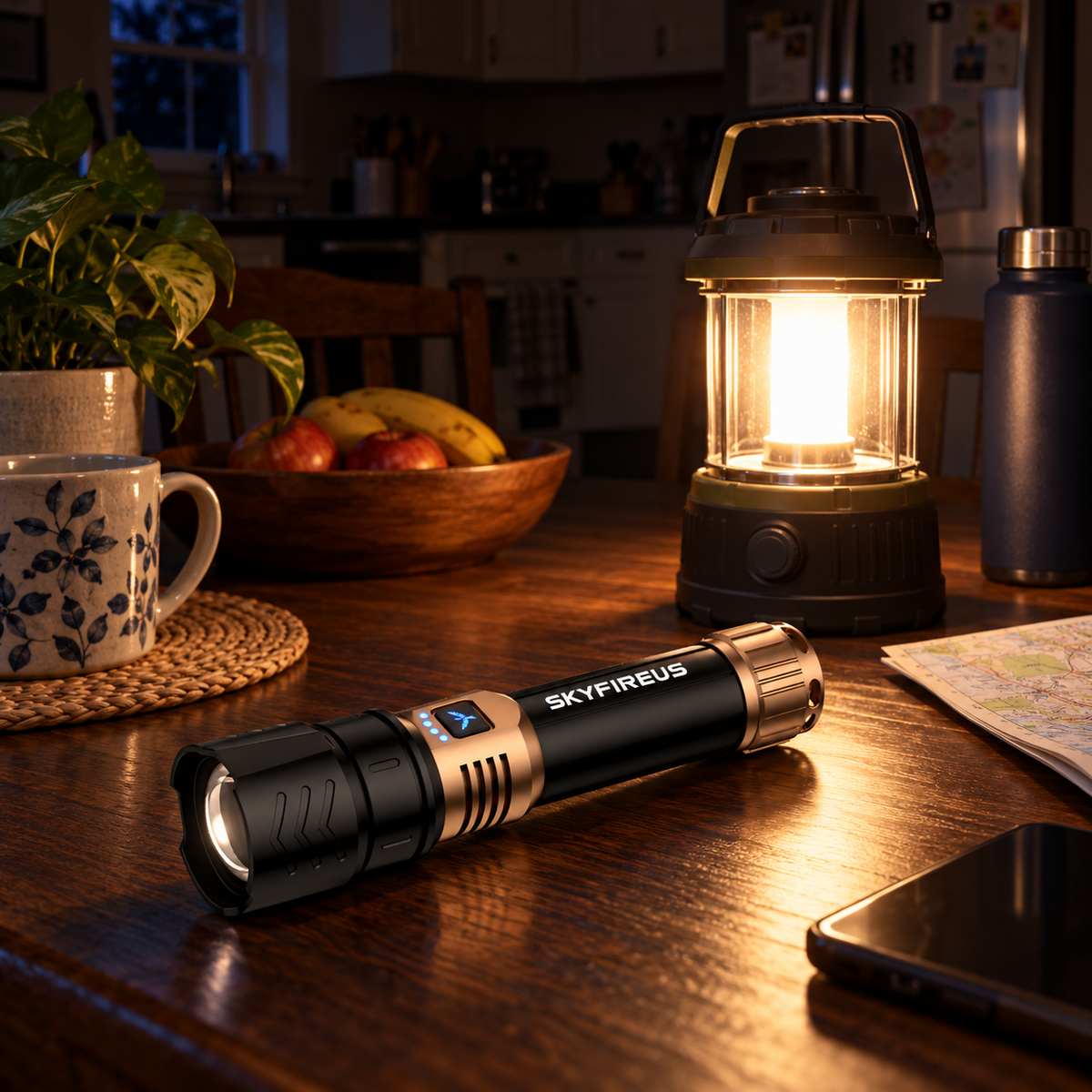
The SkyFire 2000J rechargeable flashlight has an adjustable flood-to-spot beam. It's worth considering if you move between nearby tasks and occasional checks farther across a yard.
Think about the adjustment itself as well as the beam. A light that suits a two-minute check from the back door may feel different on a longer walk. Compare the product's dimensions and controls with how you plan to carry it, rather than making the choice on maximum output alone.
Keep the nightly routine simple
Store the flashlight where you'll pick it up with your keys or leash, and check its charge regularly. Choose the beam and output before you start walking so you're not working through settings at the curb.
For many evening jobs, you'll spend most of the time using nearby light and only briefly looking farther away. Choose a flashlight that makes those ordinary minutes comfortable. You can compare other options in the SkyFire flashlight collection with that use in mind.

Leave a comment
This site is protected by hCaptcha and the hCaptcha Privacy Policy and Terms of Service apply.