

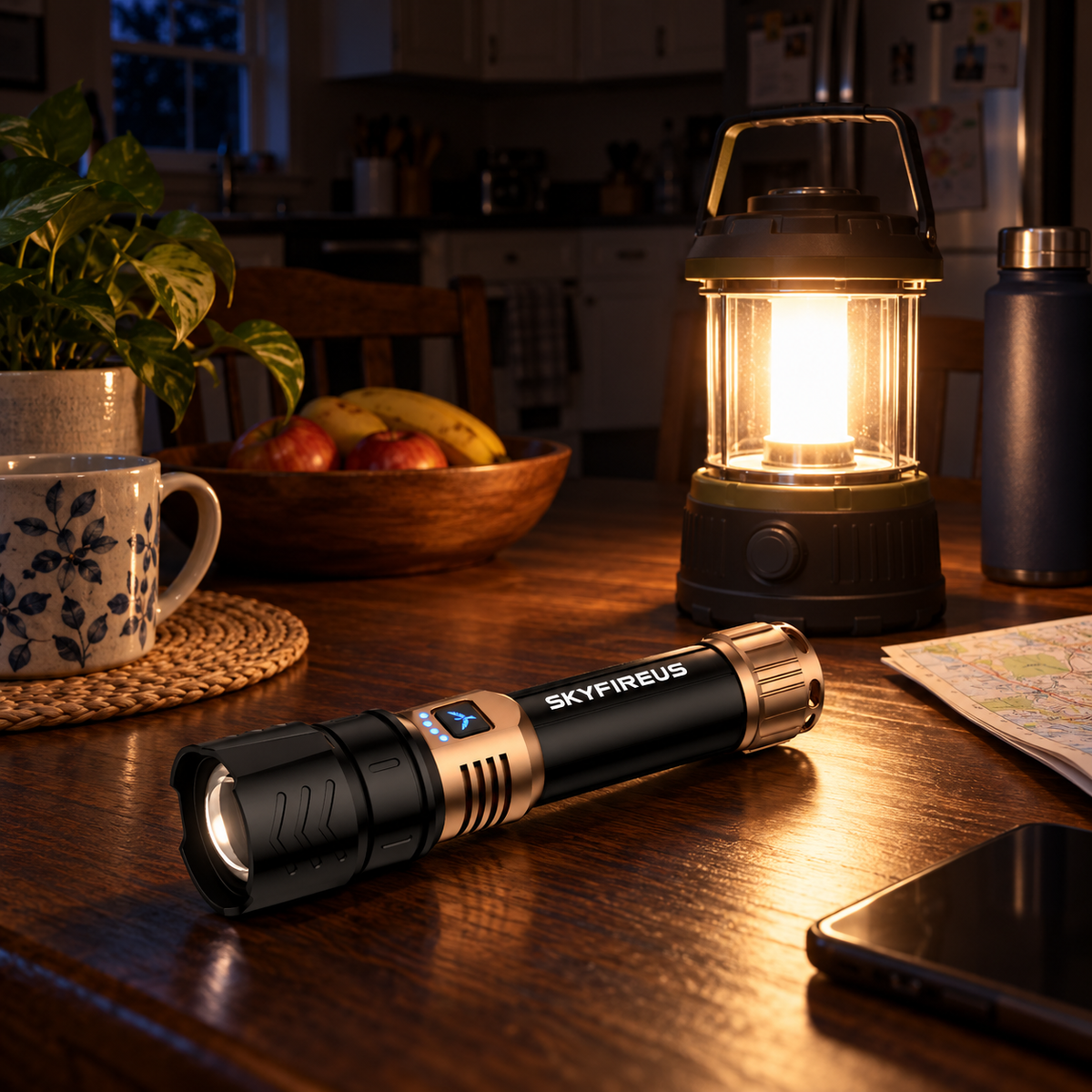
When the kitchen goes dark halfway through dinner, the first lighting problem is usually simple: finding the flashlight. If it's under a pile of charging cables in the garage, even a capable light is inconvenient at exactly the wrong moment.
A useful power outage lighting setup starts with placement. Keep a working light somewhere you can reach easily, then think about how people will move through the house and where they'll spend the evening.
Put a flashlight where you'll reach for it
Choose a consistent spot near the bed or in an easy-to-reach cabinet. Tell the other adults in the house where it lives. Returning it after a quick garage job is part of keeping that setup useful.
A dedicated flashlight also lets you keep your phone available for calls, messages, and outage updates. The phone light can help you find the household light, but it needn't do every job for the rest of the evening.
Try the flashlight's controls while the room lights are still on. Everyone likely to use it should know how to turn it off and select a comfortable brightness. A dark hallway is an inconvenient place to discover that you don't remember the switch sequence.
Separate moving light from room light
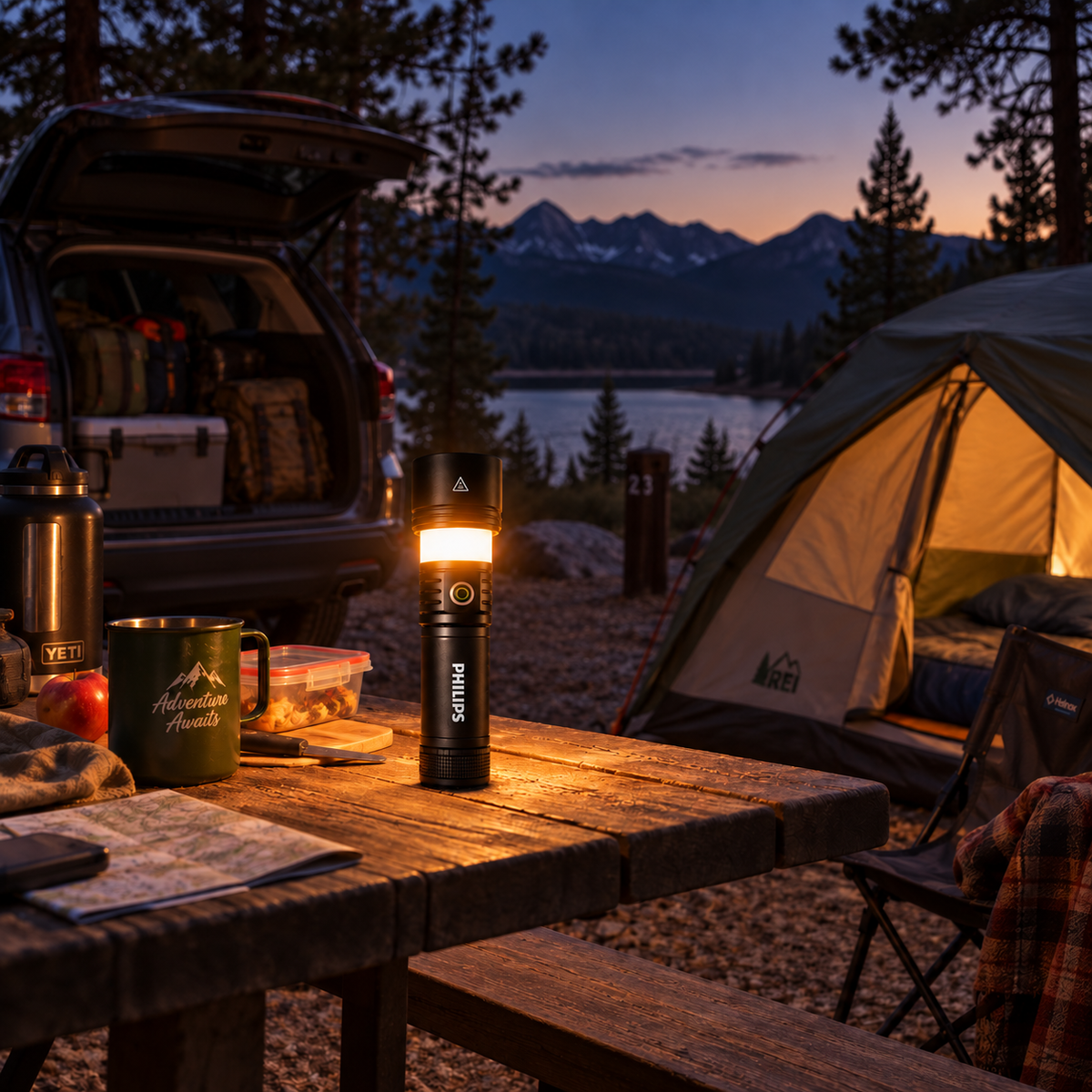
A handheld beam is useful for moving along a hallway or finding something in a cabinet. A stationary area light is more convenient when people are sitting at the kitchen table.
If one flashlight serves both roles, the room goes dark whenever someone takes it upstairs. Keeping a separate light in the shared space avoids that problem. Position it so people can see what they're doing without staring directly into the light source.
For portable lighting, the SkyFire 1097 rechargeable flashlight is one option in the store. The SkyFire 5158 with camping light adds an ambient-light function. Choose based on the role you need to fill; owning two lights that both leave the room together doesn't solve the placement problem.
Ready.gov's power outage guidance recommends flashlights, lanterns, and other battery-powered lights for staying fire safe. Make those the basis of your household lighting plan.
Use a comfortable setting indoors
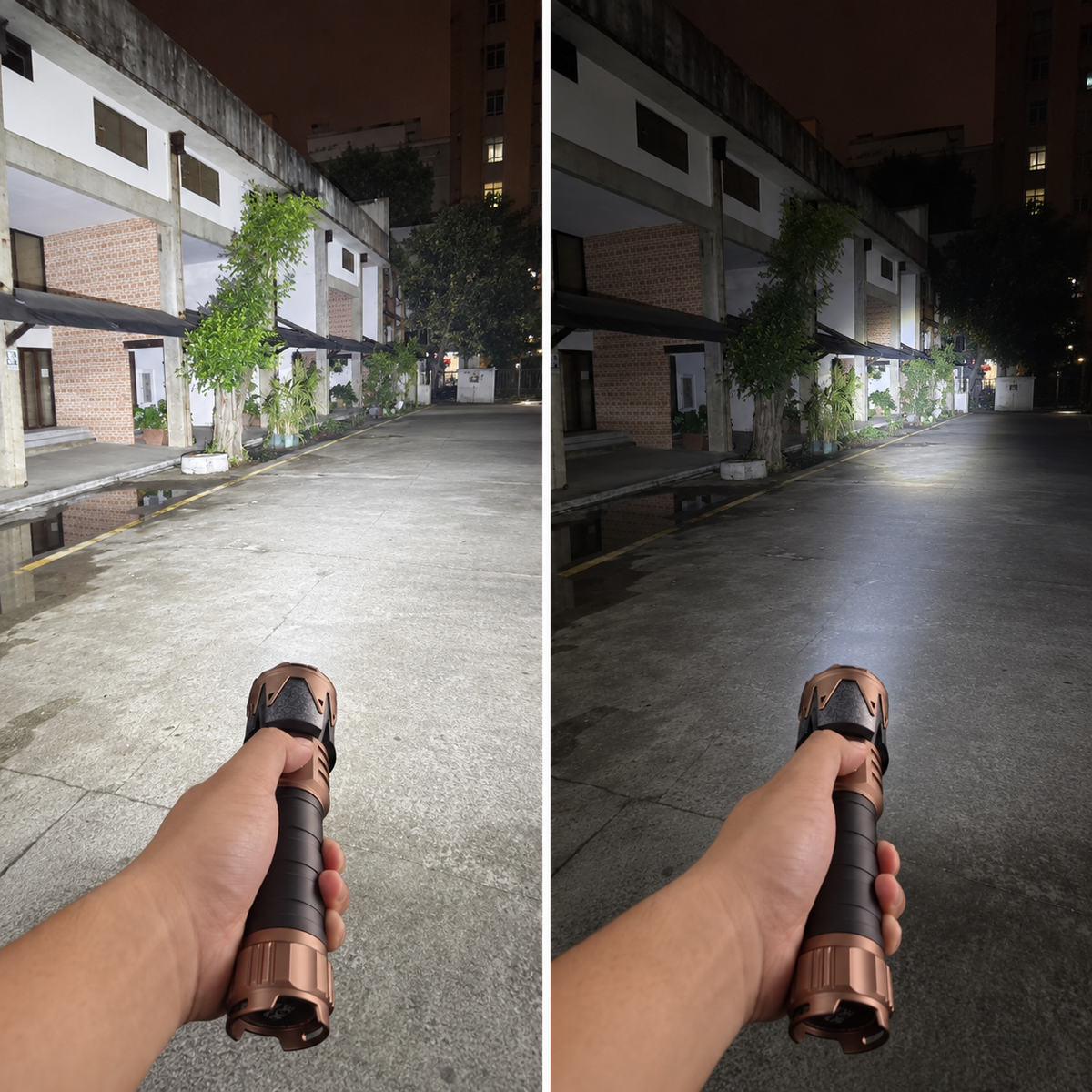
The strongest beam isn't always the easiest to use in a small room. White walls, mirrors, and glossy cabinets can make bright light uncomfortable at close range. Begin with a lower setting and increase it when the task requires more.
Light the floor ahead when walking and pay attention to stairs or objects left in the hallway. Keep portable lights stable and out of young children's reach when they're unattended. Don't cover a flashlight with a towel or clothing to make it look more like a lantern.
Give rechargeable lights a backup plan
A rechargeable flashlight is convenient between outages, when power is available. During a longer interruption, you'll need stored energy or another working light.
Keep compatible charging equipment together and check that your backup power source can charge the light before you need it. If another device uses replaceable batteries, store suitable spares as its instructions direct. Don't assume different flashlight batteries are interchangeable.
Build a recurring check into a routine you already follow. Turn each light on, inspect it, and check the charge. Follow the manufacturer's advice for charging and storage rather than leaving unfamiliar equipment plugged in indefinitely.
Walk through your setup once
In the evening, try reaching the household light and moving to the room where you'd gather during an outage. Can someone find a second light without taking yours? Can you see the stair edges? Is the charging cable in the same place as the backup power source?
Make the small fixes while you can still turn the room lights back on. A familiar location and a working charge will matter sooner than another feature on the box.

Leave a comment
This site is protected by hCaptcha and the hCaptcha Privacy Policy and Terms of Service apply.