


To compare flashlight brightness, look at lumens, beam distance, candela, and runtime together. Lumens describe how much visible light a flashlight produces, while beam distance describes how far its beam reaches under a stated test condition. A high lumen number can create a broad, comfortable pool of light without reaching as far as a lower-output flashlight with a tighter beam. The right choice depends on whether you are lighting a campsite, checking a fence line, reading a map, or walking a dark road.
Product pages often place these numbers next to each other, but they answer different questions. Use the guide below to read the specifications in context, compare brands fairly, and avoid choosing a flashlight from one impressive number alone.
What lumens tell you
A lumen is a measure of luminous flux: the total amount of visible light produced by a source. In everyday terms, lumens give you a sense of how much light is available to spread across a scene. A higher lumen rating can make a nearby campsite, workbench, or driveway look brighter, especially when the light is set to a wide flood pattern.
Lumens do not tell you how efficiently that light is directed. Two flashlights can produce similar total lumens while sending very different amounts of light toward a distant target. Reflector shape, lens design, LED placement, and the selected mode all affect what your eyes see at a particular distance.
Many rechargeable flashlights offer more than one output level. The advertised maximum may be useful for a short search, while a medium or low mode is more comfortable for camp chores, reading, or moving around a room. Ask which mode the listed lumen figure represents and whether the product page identifies a test duration.
What beam distance tells you
Beam distance is the estimated distance from the flashlight to the point where the beam reaches a defined minimum level of illumination. It is a directional measurement, so it is strongly influenced by how tightly the beam is focused. A narrow spot can project useful light farther because more of the available light is concentrated into a smaller area.
Beam distance should be read as a comparison tool, not a promise that every object at that distance will look brightly lit. Weather, dust, humidity, surface color, and your eyes' adaptation to darkness change the result. A pale reflective sign may be visible at a greater distance than a dark animal or a rough tree trunk.
When comparing brands, check that the beam-distance figures use comparable test conditions. If one listing reports a maximum distance at a high mode and another uses a lower mode, the numbers are not a direct apples-to-apples comparison.
Where candela fits in
Candela describes luminous intensity in a particular direction. It helps explain why a focused flashlight can look intense at the center of its beam even when its total lumen output is not the highest in a product category. A high-candela design concentrates light forward, which can improve long-range visibility and make the center of a spot easier to pick out.
Candela is useful for comparing search-oriented or long-range lights, but it does not describe the total amount of light around you. A high-intensity spot may leave your feet and peripheral view relatively dark. For a campsite or repair area, a balanced beam can be more practical than the highest possible intensity.
Why runtime belongs in a brightness comparison
Runtime is the length of time a flashlight operates under a specified test setup. It is tied to output mode, battery capacity, temperature, regulation, and the way the light manages heat. A flashlight that starts very bright may reduce output after a period of use to control heat or protect the battery, so a runtime graph or mode-specific claim tells you more than one headline number.
Look for a clear statement such as “runtime on low mode” or “runtime until output falls below the test threshold.” If a listing gives only a single runtime without naming the mode, treat it as incomplete information and check the manual or ask the seller. Product pages should identify the tested mode before you plan a trip around that number.
High lumens do not automatically mean a longer beam
Imagine two flashlights with similar total output. One spreads light across a broad area for walking and campsite tasks. The other uses a deeper reflector to form a tighter spot. The first may make more of the ground around you visible, while the second may make a distant trail marker easier to see. Neither is universally brighter in every situation; they are distributing light differently.
Think of lumens as the size of the light budget, candela as how strongly it is aimed in one direction, and beam distance as the practical reach reported for that beam.
This is why a flashlight advertised with many lumens can still have a shorter useful reach than a lower-lumen model built for a concentrated spot. Conversely, a long-reaching spot can be uncomfortable for close-up work and can create hard shadows around your hands.
Flood, spot, and adjustable beams
Flood beams
A flood beam spreads light over a wide area. It is useful for walking around camp, sorting gear, checking a tent entrance, or working in a garage because it covers more of the scene and reduces the need to aim constantly. The tradeoff is that the center intensity and reported beam distance are usually lower than on a focused spot.
Spot beams
A spot beam concentrates light toward a smaller area. It helps with scanning a far fence line, locating a trail feature, or checking a vehicle parked away from camp. Because the beam is directional, keep your footing and nearby obstacles in mind when moving with it.
Adjustable beams
An adjustable beam can shift between wider and narrower patterns. This can be convenient when one flashlight has to handle camp setup and a distant check. Read the product description carefully to confirm what “adjustable” means for that model; a claim about beam adjustment does not by itself reveal the exact range, mechanism, or output in each position.
How to compare flashlight specifications
Use the same questions for every brand instead of comparing isolated headline figures. The table below is a quick framework for reading a listing.
| Specification | What it measures | Question to ask |
|---|---|---|
| Lumens | Total visible light output | Which mode produces this figure, and for how long? |
| Beam distance | Reported reach to a defined light level | What test condition and mode produced the distance? |
| Candela | Intensity in a particular direction | Is the design optimized for a focused spot or a wider beam? |
| Runtime | Operating time under a stated setup | Is the runtime tied to low, medium, high, or another mode? |
| Battery details | Energy source and charging arrangement | Is the battery included, replaceable, and charged with the supplied method? |
If a listing leaves one of these answers blank, mark the specification as unknown rather than filling the gap with an assumption. Exact values can vary by production version, battery condition, and test method.
Match brightness to real tasks
Camping and hiking
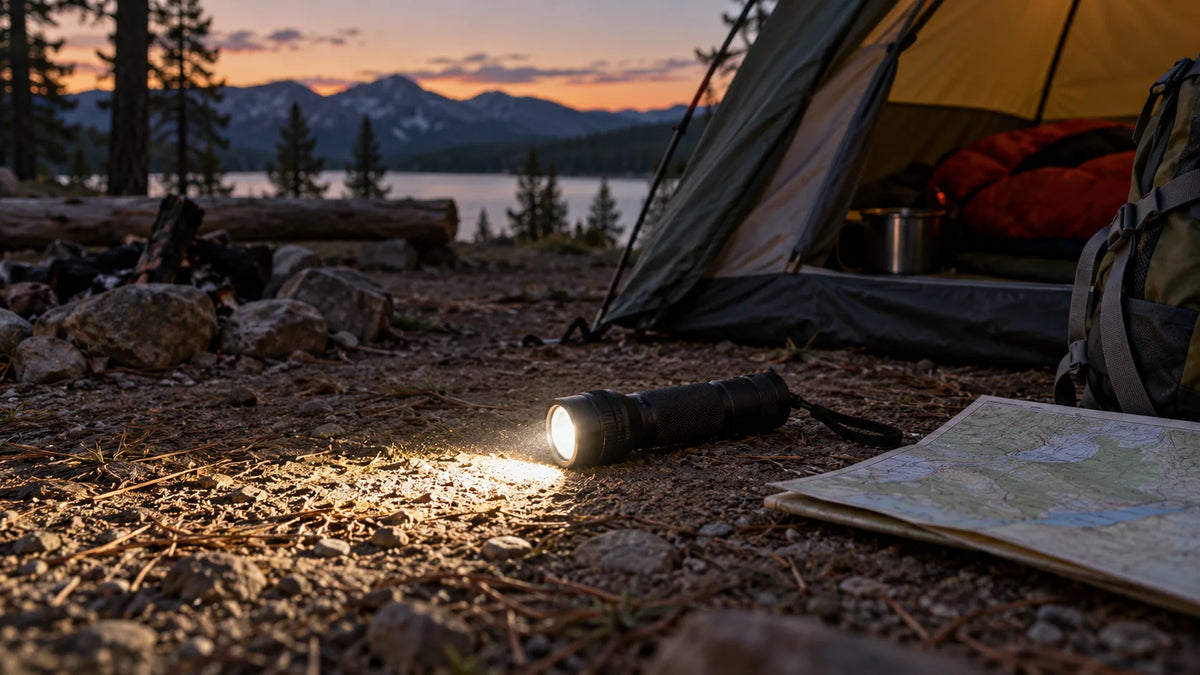
Choose a wide beam or a flashlight with a practical flood mode for tent setup, cooking, and finding gear. A separate headlamp can keep both hands free, while a handheld light can be aimed toward a trail or campsite boundary. Runtime on the mode you will actually use matters more than a brief maximum-output claim.
Yard and property checks
A focused beam can help you inspect a gate, shed, or far corner without walking the entire distance. Keep a lower mode available for close work so the center hotspot does not wash out details at arm's length.
Home and garage work
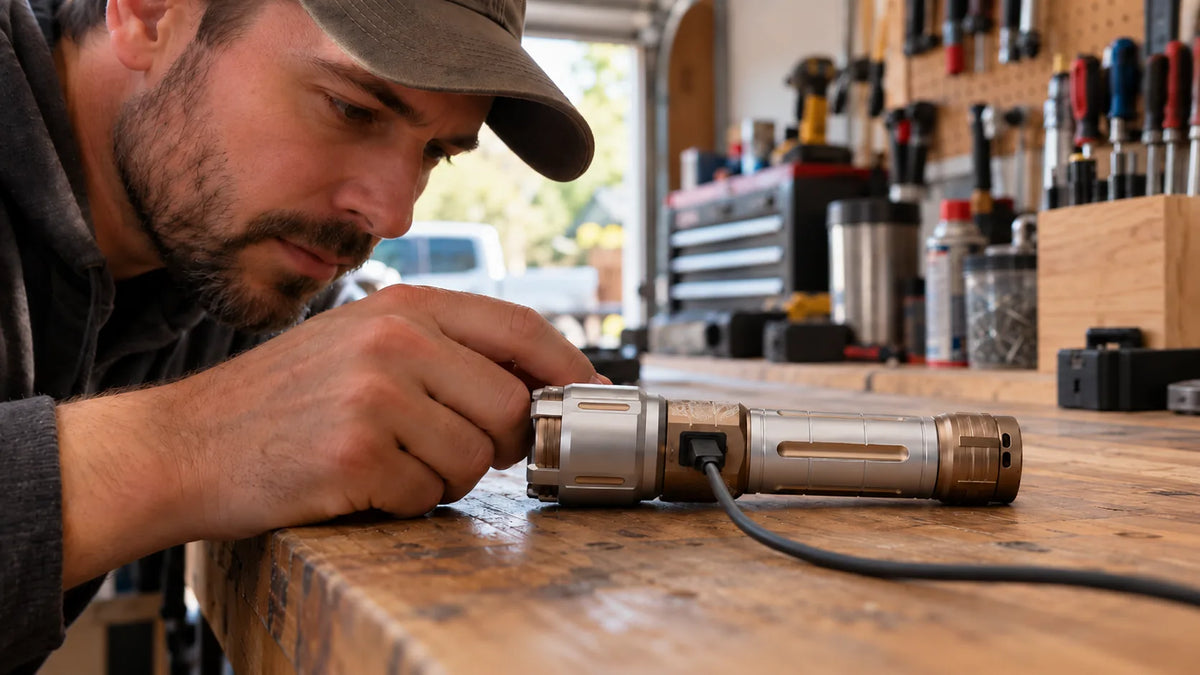
For repairs, look for even nearby coverage and comfortable handling. A moderate mode that stays steady can be more useful than a maximum mode that quickly steps down or creates glare on a shiny surface.
Flashlight buying checklist
Before ordering, run through this short checklist:
- Identify the main task: close-up work, walking, campsite coverage, or distance checking.
- Read the lumen claim and note the mode associated with it.
- Check beam distance and candela, if provided, for the same mode and test basis.
- Find mode-specific runtime information and plan around the mode you will use most.
- Confirm battery capacity, charging method, and whether the cable or charger is included.
- Compare size, weight, controls, and grip with how you will carry the light.
- Look for a return or support path if the listing leaves key specifications unclear.
For a broader look at rechargeable options for outdoor use, browse the SKYFIRE flashlight collection and review each product page for the exact modes and specifications.
The best brightness comparison is the one that matches the beam pattern, mode, and runtime to your actual task. Lumens show the size of the light output, beam distance shows reported reach, candela explains directional intensity, and runtime tells you how long the chosen setup can keep working. Read all four together and you can choose a flashlight with fewer surprises after dark.

Leave a comment
This site is protected by hCaptcha and the hCaptcha Privacy Policy and Terms of Service apply.